



You do not need a complicated budgeting system to stay on top of your money. You need one short, repeatable habit you actually do every month. This is the 30-minute monthly money review: a fixed sequence that pulls together bill organization and subscription auditing into a single check-in, so you are not running two separate systems side by side.
If you have not yet set up the underlying pieces, this review works best alongside two other guides: organizing your monthly bills and due dates and auditing your subscriptions for spending leaks. Those two guides go deep on each piece. This one is shorter on purpose: it shows you how to combine both into one monthly habit instead of tracking them separately.
Why a lighter monthly check-in can work
Daily or weekly money tracking works well for some people, but for others it does not survive contact with a busy month. It becomes one more thing to keep up with, and when it slips, it can feel like failure rather than a minor miss. If daily or weekly tracking feels too demanding to maintain, a fixed monthly review can provide a lighter recurring check-in instead, one that is short enough to actually finish, infrequent enough that it does not compete with your daily routine, and still regular enough to catch problems before they become expensive.
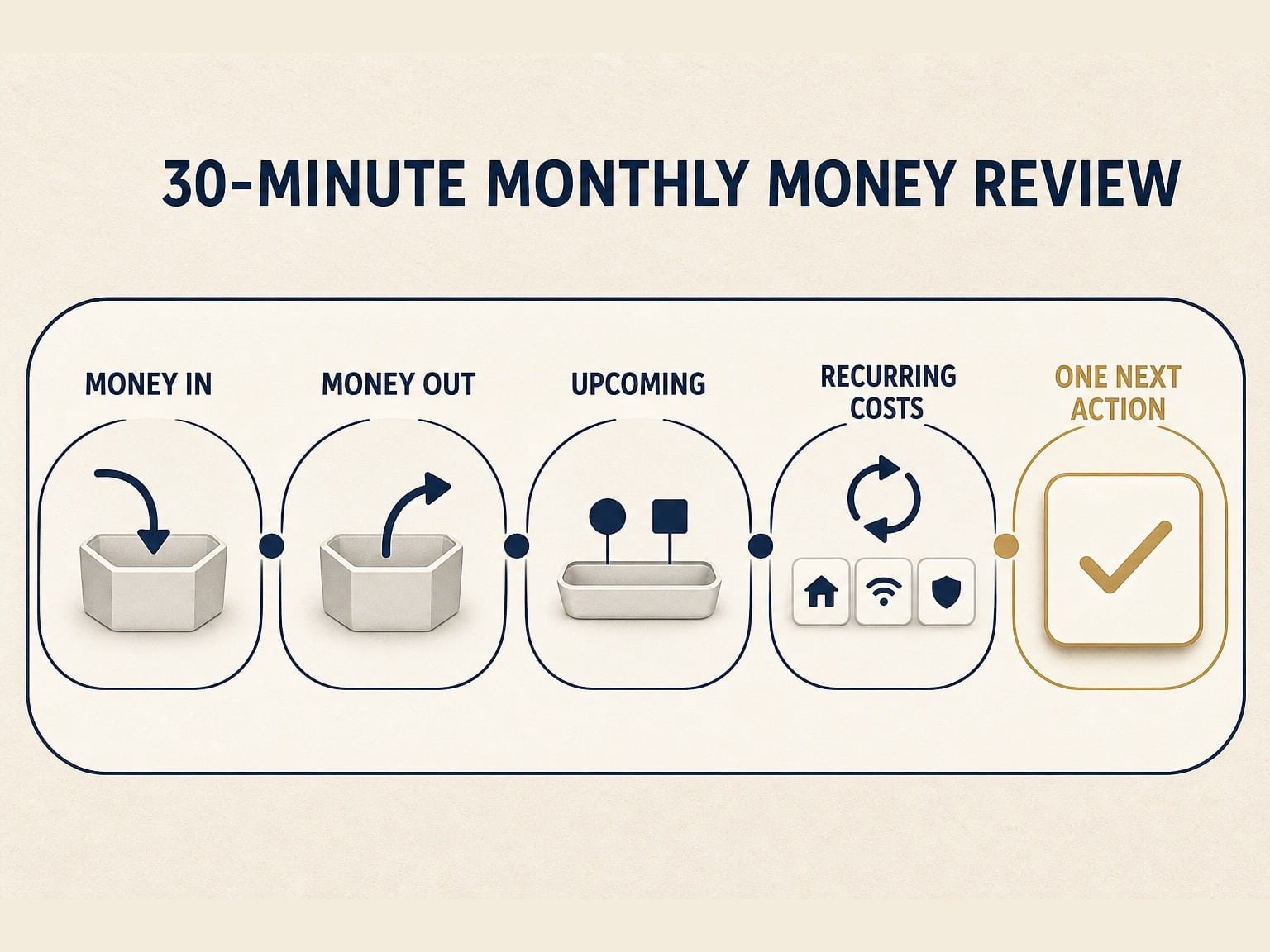
The 30-minute monthly review sequence
Minutes 1 to 10: Bill calendar check
Open your bill calendar or list. Confirm every recurring bill for the coming month is accounted for, with correct amounts and due dates. Note anything that changed since last month, a bill that increased, a due date that shifted, a new recurring charge you were not expecting. This is the same list built in the monthly bill calendar method, just a quick confirmation pass rather than building it from scratch each time.
Minutes 10 to 20: Subscription pass
Scan your bank or card statement for the past month. For each subscription or recurring charge, quickly sort it into keep, cancel, downgrade, or review, using the same categories from the subscription audit method. You do not need to research every service in depth every month, that is what the full audit is for. This monthly pass just catches new charges and prompts a second look at anything you marked “review” last time.
Minutes 20 to 27: One number check-in
Look at one simple number: what came in this month versus what went out, including the bills and subscriptions you just reviewed. You do not need a detailed budget breakdown here, just a general sense of whether the month trended in the direction you wanted. If something looks off, that is useful information to carry into next month, not a reason to panic or overhaul your whole system.
Minutes 27 to 30: One decision
Pick exactly one thing to act on before next month’s review. Cancel the one subscription you have been meaning to cancel. Move one bill’s due date to line up better with your paycheck. Set aside a specific amount for a known upcoming expense. One clear action beats a long list of vague intentions you will not follow through on.
Educational and organizational only. Not financial, tax, legal, investment, credit, or professional advice. No specific financial result is guaranteed.
Making it stick
Put this review on a fixed date, the first weekend of the month or a specific weekday works well, so it becomes a routine rather than something you have to remember to schedule. Keep it to the same 30 minutes each time. If a particular month uncovers something bigger, a bill that needs real attention or a subscription cleanup that needs more than a quick pass, that is a sign to go do the deeper version of that specific piece separately, not a reason to let this monthly review balloon into a longer task.
Build the full system
If you want a structured, printable version of this monthly rhythm along with the deeper budgeting tools it connects to, the Simple Money Reset Workbook is built around this kind of repeatable monthly system. You can also start smaller with the free 7-Day Money Reset Starter Kit.