


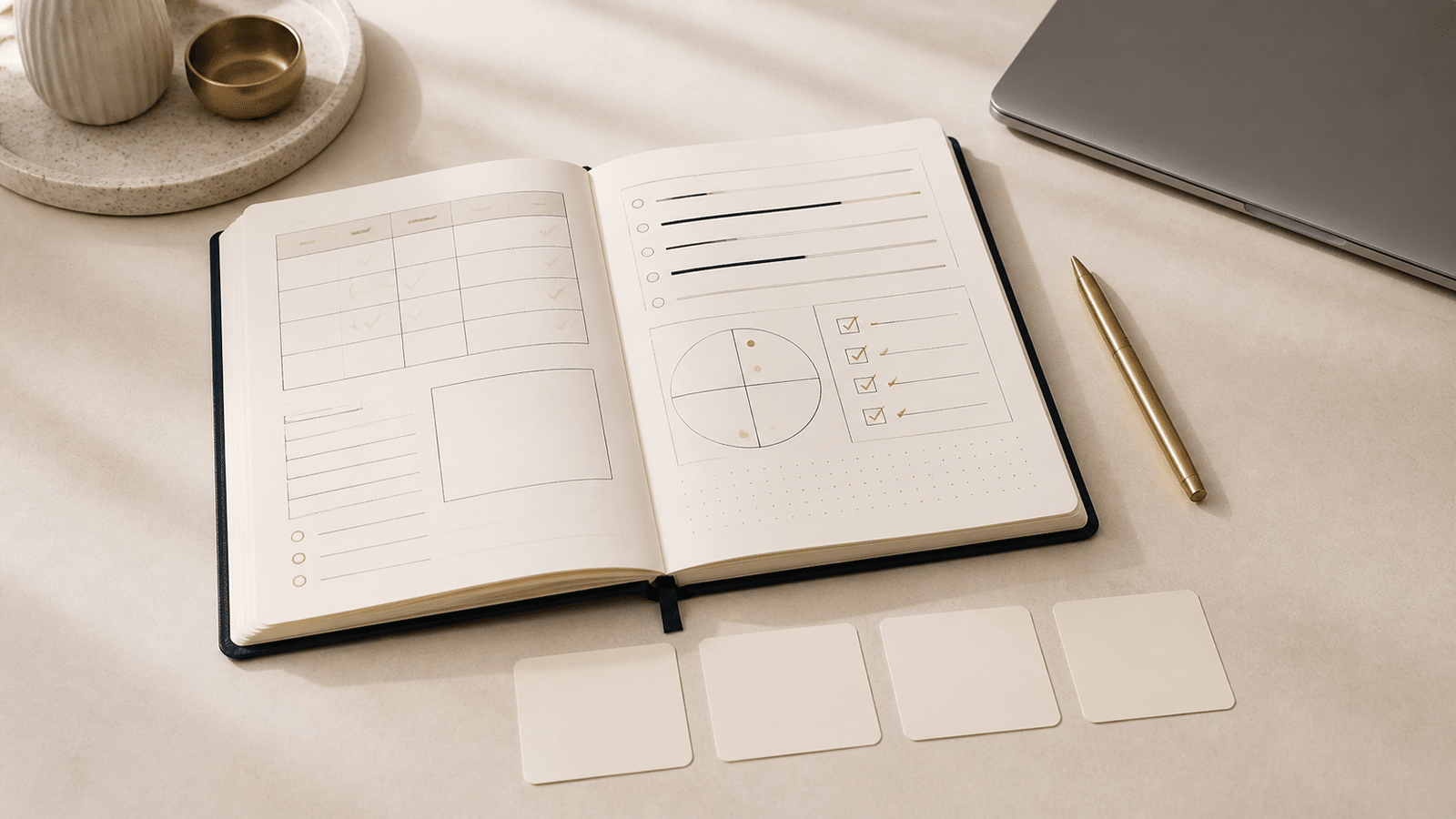
A side project is easy to start and surprisingly hard to evaluate once you are a few weeks into it. In the beginning, the direction feels obvious: you had an idea, you started, and effort was the only real question. But somewhere around week three or four, evaluating it stops being simple. You are not sure if it needs more time, if the idea itself needs to change, if you are just tired this week, or if you are still working on it mostly because you already put time in.
None of those feelings is wrong. They are also not a decision.
This is a simple way to turn a vague feeling about your side project into an actual decision, using the last 30 days as your evidence. You do not need to decide whether this project deserves the next year of your life. You only need to decide whether it deserves the next 30 days.
Why use a 30-day check-in?
A fixed check-in gives you a middle path between two common patterns.
The first is evaluating the project every single day, which turns normal ups and downs into a small crisis every time one session goes badly. A slow evening does not mean the project is failing, and a good one does not mean it is settled either.
The second is the opposite problem: pushing the doubts aside entirely until the question finally gets forced, usually during one especially frustrating week, for reasons that have more to do with that week than with the project itself.
A 30-day window gives you enough time to see a real pattern instead of a mood. It is a practical review period this framework uses, not a scientifically proven ideal number for every project. If your project runs on a different natural cycle (a semester, a season, a content calendar), use the same check-in on whatever period actually fits. The point is a fixed, repeatable checkpoint: the number 30 is a starting default, not a rule.
Look back before you decide forward
Before deciding what comes next, look honestly at what actually happened over the last 30 days, not what you hoped would happen and not what you are afraid happened. A few areas are worth reviewing:
Time cost. How much time has this actually taken, compared to what you expected when you started?
Energy cost. After a typical work session, do you generally feel drained or recharged?
Learning. Are you learning something real, even if the project itself has not taken off?
Traction or response. Is there any outside signal this is working: interest, use, feedback, or early results, even small ones?
Usefulness. Does this still solve a real problem for you or for someone else?
Opportunity cost. What are you not doing because of this project, and how much does that actually cost you?
Motivation. When you think about working on it this week, what is your honest, first reaction?
Next experiment. Do you know one specific thing to try next, or do you feel out of ideas?
You do not need a spreadsheet to do this. Reading through those eight areas can make the pattern much clearer before you choose one of the four outcomes below.
Outcome 1: Continue
Continuing tends to fit when most of those eight areas hold up: the time and energy cost feel roughly proportional to what you are getting back, you can point to real learning or traction, and your honest reaction to working on it this week is closer to interest than dread.
Continue does not mean the project is a guaranteed success. It means the last 30 days gave you a real reason to keep going at the current pace, not just habit or momentum.
If Continue is the right call, resist the urge to change things that are already working just because you feel like you should be doing more. The goal is proportional effort, not maximum effort. Set your next checkpoint (another 30 days, or whatever period fits your project) and come back to this same review then.
Outcome 2: Adjust
Adjust fits when something in the last 30 days was genuinely working, but one or two specific factors are dragging the rest down. Maybe the idea is sound but the time commitment does not match your actual schedule. Maybe the scope has grown past what a side project can reasonably hold. Maybe the format itself is the problem: a weekly habit that should be monthly, a solo effort that needs a collaborator, a broad idea that needs to narrow.
The most useful thing you can do here is name the single biggest friction point, not everything that could theoretically be better. Changing one meaningful variable at a time makes it easier to see what actually helped. If you change several things at once, it becomes much harder to know which change mattered.
Once you have identified that one variable, define a specific next experiment: what you are changing, and what you will be watching for over the next 30 days to know whether the change worked.
Outcome 3: Pause
A pause fits when the project may still have real value, but the current timing, your current capacity, missing information, or outside circumstances do not support continuing at the same pace right now. This is different from quietly letting a project fade because you stopped opening the file. A deliberate pause is a decision you make on purpose, not something that happens to you through avoidance.
Two things turn a pause into something deliberate instead of an unresolved obligation sitting in the back of your mind. First, choose a specific revisit point: a date, or a clear condition (“when this busy stretch at work ends,” “once the semester is over”), not a vague someday. Second, write down where the project actually stands before you set it down: what is done, what you were about to try next, and why you paused. Future you will be glad present you took five minutes to do this.
Outcome 4: Stop
Stopping fits when, across most of the eight areas above, the project is consistently costing more than it is giving back: more time than it is worth, more energy than it returns, little real learning left to extract, and no realistic signal that continuing changes that pattern. That combination is worth taking seriously rather than explaining away.
Closing a project on purpose is a legitimate outcome, not a personal failure. The time you already spent already happened. It is not returned to you by continuing something that no longer earns its place, and it is not wasted simply because the project ends. Before you close it, take a few minutes to write down what you learned: a skill, a clearer sense of what you actually want to work on, or a mistake worth not repeating. That record is what carries forward into whatever comes next, even though this particular project does not.
FREE PRINTABLE SCORECARD
The Side Project Decision Scorecard
A one-page printable to help you review the last 30 days of your side project and get a clearer read on whether it currently points toward Continue, Adjust, Pause, or Stop.
The question that matters most
It is tempting to reduce all of this to one question: did this make money? For most side projects, especially early ones, that is the wrong first question, or at least an incomplete one. Learning, useful output, a real skill, an honest response from the people you are building for, and evidence that supports (or rules out) another experiment are all real returns on a side project, even before any money changes hands.
At the same time, “I’m learning something” cannot become a permanent excuse to keep something running long after it has stopped earning its place. Learning is a legitimate reason to continue, but it should be a specific answer to “what am I learning, and is it still worth what this is costing me,” not a vague feeling you reach for whenever the honest answer is closer to Stop.
The trade-off underneath all four outcomes is the same one: time and attention spent here cannot be spent anywhere else. That is not a reason to feel guilty about your side project. It is the actual reason a structured check-in is worth doing every so often, instead of running on autopilot.
Run the check-in again
This is not meant to be a one-time decision. It is a short, repeatable loop:
Do the work for the period you set.
Observe honestly what the last 30 days (or whatever period fits) actually looked like.
Decide which of the four outcomes fits: continue, adjust, pause, or stop.
Set your next checkpoint, so the next review has a fixed date instead of only happening when things start to feel bad.
That loop is the entire framework. You do not need anything on top of it. The same review, repeated on a schedule, is enough to keep making a deliberate decision about your side project instead of drifting through it.
FREE PRINTABLE SCORECARD
The Side Project Decision Scorecard
A one-page printable to help you review the last 30 days of your side project and get a clearer read on whether it currently points toward Continue, Adjust, Pause, or Stop.
For more practical systems like this one, browse the Resource Library.