


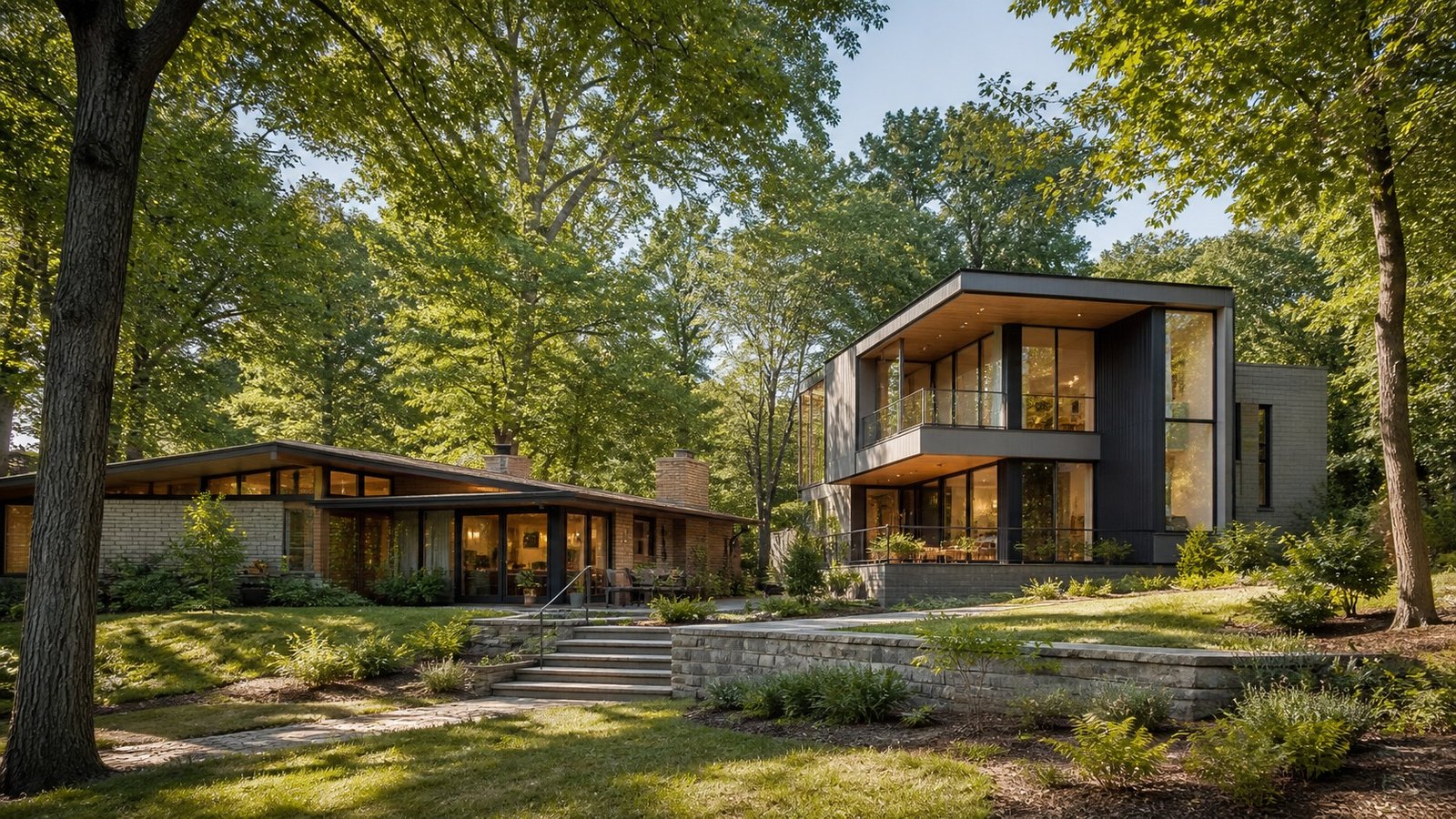
Drive a few miles in Atlanta and you can go from a carefully restored 1950s ranch house to a brand-new contemporary build going up along the BeltLine. That mix is part of what makes the city worth paying attention to if you’re interested in modern or contemporary homes, and it’s also why the word “modern” gets used loosely here. In architecture, it actually means something specific and historically rooted, different from “contemporary.” This is a grounded look at what that difference means, how Atlanta fits into the picture, and a few practical things worth thinking through before you take on a home project of your own.
Modern vs. Contemporary: What’s the Actual Difference?
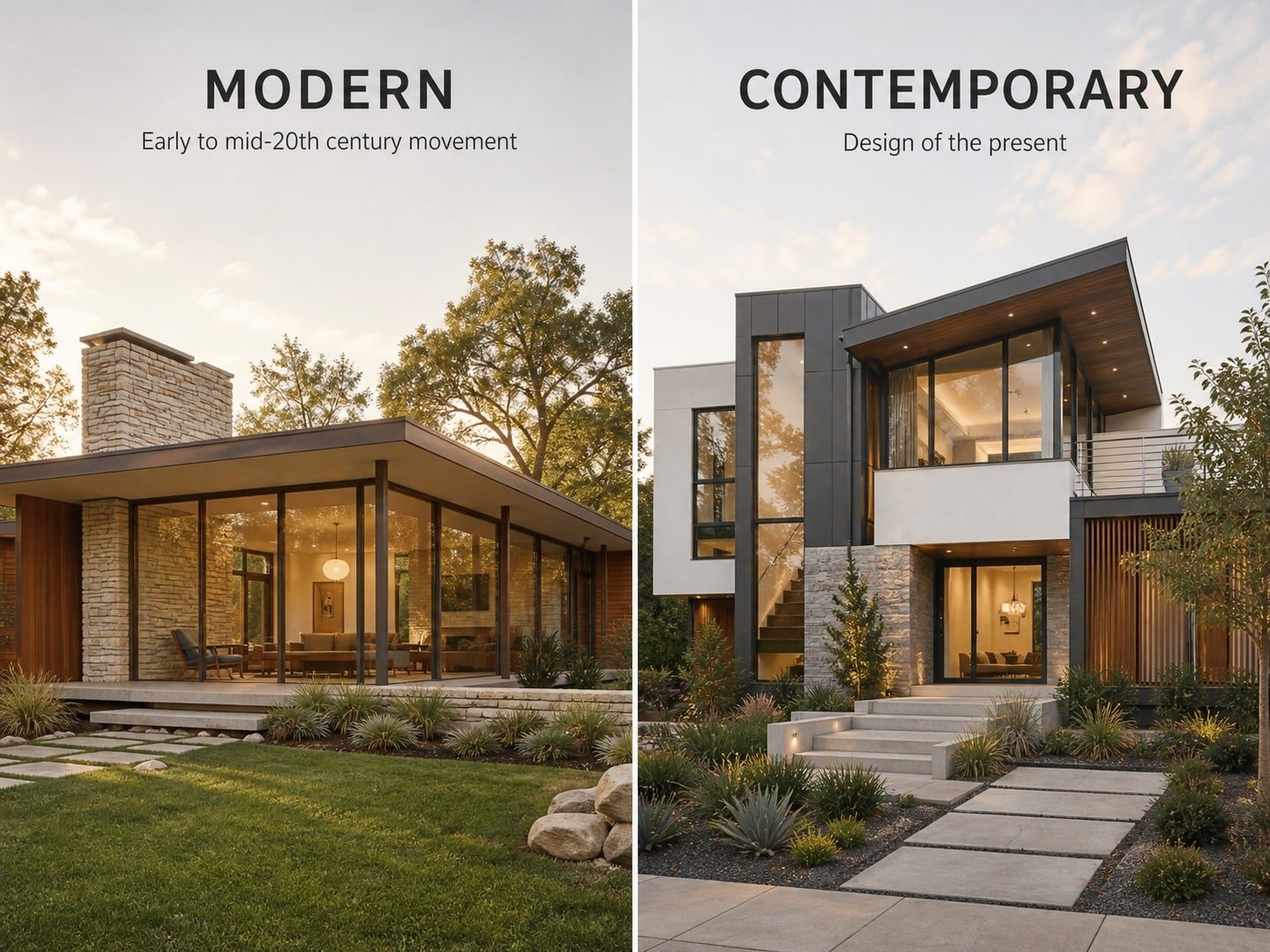
The two terms get used interchangeably, but they don’t mean the same thing. Modern architecture refers to a specific design movement that took shape in the early-to-mid 20th century, built around the idea that “form follows function.” Modern homes tend to favor rectilinear shapes, a low horizontal profile, minimal ornamentation, and an honest use of materials rather than decoration for its own sake.
Contemporary architecture, by contrast, isn’t tied to one era at all. It simply describes whatever’s current. Contemporary homes today often mix curves with sharp angles, lean on sustainable materials and energy-efficient systems, and take more liberties with asymmetry and free-form shapes than strict mid-century modern design ever did.
What the two styles share is more useful than what separates them: large expanses of glass, open floor plans, minimal clutter, and a deliberate relationship to the outdoors. That overlap is a big part of why “modern” and “contemporary” get used as near-synonyms in everyday conversation, even though architects draw a clearer line between them.
What Defines a Modern or Contemporary Home in Atlanta Right Now
Across both the restored mid-century houses and the newer contemporary builds you’ll find around Atlanta, a few characteristics show up again and again. Clean, uncluttered lines. Natural materials like wood and stone, often paired with steel or glass. Vaulted ceilings and exposed structural beams. Skylights and clerestory windows that bring in daylight without sacrificing privacy. Increasingly, eco-friendly systems like solar panels and high-efficiency HVAC show up too. On the higher end, you’ll also see more sculptural touches, like floating staircases, irregular rooflines, and strong geometric massing on the exterior.
None of this is unique to Atlanta, but the city’s mix of a genuine mid-century housing stock and an active pipeline of new contemporary construction gives it an unusually complete cross-section of the style, from restoration projects to ground-up new builds.
Atlanta’s Mid-Century Modern Legacy
Atlanta’s connection to modern residential design isn’t a recent trend. It goes back to the postwar building boom of the 1950s and 60s, when a wave of mid-century modern houses went up across several intown and close-in neighborhoods, generally defined by simple lines, low-pitched rooflines, clerestory windows, and a strong indoor-outdoor connection.
One of the most historically significant examples is Collier Heights, on Atlanta’s west side. According to its National Register of Historic Places nomination documentation, prepared with the Georgia Historic Preservation Division, Collier Heights is recognized as a nationally significant, planned, upscale suburb developed by and for the city’s Black middle and upper class beginning in the 1950s, home at various points to figures including Martin Luther King Sr., civil rights attorney Donald Lee Hollowell, and construction executive Herman J. Russell. The nomination documentation specifically highlights the neighborhood’s Ranch and Split-Level style homes as representative examples of mid-century residential architecture. The Collier Heights Historic District was listed on the National Register of Historic Places in 2009. It remains one of the clearest examples of how mid-century modern design in Atlanta was never just an aesthetic trend. In Collier Heights specifically, it was tied directly to a community building something lasting for itself.
Northcrest, another close-in Atlanta neighborhood developed in the same postwar period, carries similar mid-century housing stock and has seen renewed buyer interest in recent years from people specifically looking for original mid-century character rather than a newer build.
Where the Style Shows Up Today
Newer contemporary construction shows up throughout intown Atlanta alongside older housing stock, with the specific mix varying block by block. This article isn’t a substitute for walking a neighborhood yourself or working with a local real estate professional if you’re actually house-hunting.
Design Features Worth Evaluating
A few features are worth evaluating in Atlanta-area modern and contemporary homes, whether you are buying or renovating: biophilic touches such as natural light, plants, and organic materials layered into otherwise clean-lined spaces; wellness-focused bathrooms built around soaking tubs, steam showers, and natural light; dedicated live/work space for people who work from home at least part of the week; and energy-efficiency features such as high-performance windows, better insulation, and solar integration, which are increasingly common in newer builds and renovations rather than treated as optional extras.
Before You Buy or Renovate: Practical Considerations
If you’re seriously considering either buying a modern or contemporary home in Atlanta, or renovating an existing one into that style, a few practical realities are worth knowing going in. Renovation cost varies with structural condition, project scope, systems, finish level, permitting, and contractor pricing, and it can range widely between a modest cosmetic update and a full gut renovation that relocates major systems. Rather than anchoring on a specific dollar figure, which shifts with market conditions and location, readers should obtain a thorough inspection and current, qualified local estimates before setting a project budget.
Older mid-century homes carry a specific risk worth flagging: if a home hasn’t been well maintained, the cost of bringing structural systems up to modern standards can, in some cases, approach or exceed what it would cost to build new. That’s not a reason to avoid mid-century homes; many of the most desirable ones in Atlanta have been lovingly restored. But it’s a reason to get a thorough structural inspection before assuming a renovation budget, rather than after.
Getting Your Full Financial Picture Ready
None of the above is a small decision. Whether you’re buying a home in this style or taking on a renovation to move an existing home toward it, it’s a major purchase that touches the rest of your finances, not just the project budget itself.
Before committing to a number, it’s worth taking stock of the fuller picture: your existing bills and recurring expenses, any subscriptions or memberships that quietly add up, current debt obligations, how much of a cash buffer you’d have left after the project, and how the new project cost fits alongside everything else you’re already paying for. This is exactly the kind of organizing work a structured budgeting exercise is built for. It’s not about telling you whether to buy or renovate; it’s about making sure the decision is made with a clear, honest view of where your money actually goes.
If you’re at that stage, BMV101’s Resource Library has budgeting and planning tools built for exactly this kind of “get organized before a big decision” moment, worth a look before you finalize a renovation or purchase budget of your own. If you want a shorter starting point, the free 7-Day Money Reset Starter Kit is a quick way to get your bills and spending organized before you commit to a number.
The Bottom Line
Atlanta’s modern and contemporary housing scene is genuinely layered: a real mid-century history with neighborhoods like Collier Heights at its center, alongside an active, ongoing wave of new contemporary construction. Whether you’re drawn to a restored mid-century house or a newly built contemporary one, the style itself is well worth understanding on its own terms. And if a purchase or renovation is actually on your near-term horizon, getting the rest of your financial picture in order first is time well spent.